






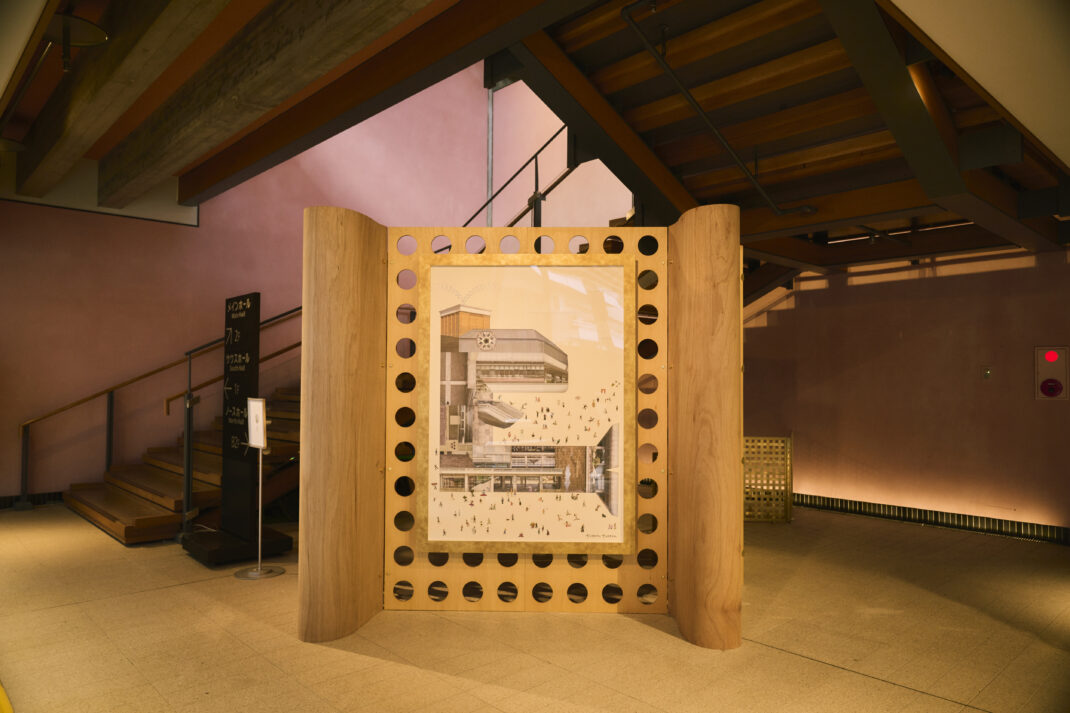
SHINSEKI
A Place Where Continuing Someone’s
Something from Some Time Ago
Becomes a Beginning
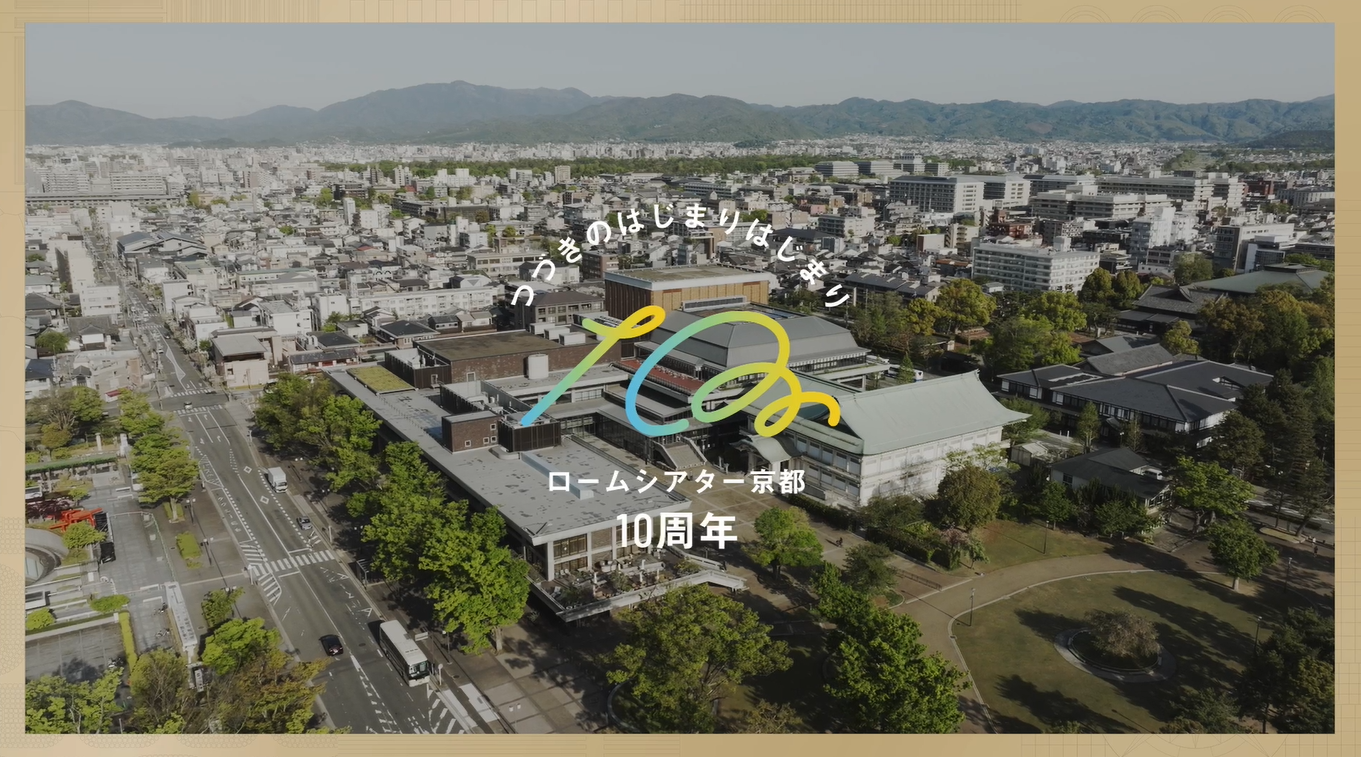
Kyoto-based tupera tupera has distilled that unique character of ROHM Theatre Kyoto into an accessible image. Inspired by similarities in the venue’s architecture when seen from a bird’s-eye view, tupera tupera reimagined the spirit of the theatre as a whale, roaming the seas. As chance would have it, the character used to write “whale” in Japanese contains the character for kyo (from Kyoto). A creature of creativity and mystery that has encompassed all sorts of beings and which appears in many myths and works of art, the whale here represents the nature of ROHM Theatre Kyoto as an ever-changing organism.
Harboring the design of the original architect, Kunio Maekawa, and the vision of his successor, Hisao Koyama, the building today continues to make waves in the sea of Kyoto,which then spread out into the world and the future, like an ocean going on and on forever.
We hope that ROHM Theatre Kyoto remains a living place where continuing someone’s something is always a new beginning.
Artwork: tupera tupera / Tatsuya Kameyama, Atsuko Nakagawa
Design: Kazuki Kitahara (UMMM)
Photography: Kenta Yamaji (SHINSEKI Inc.)
Furniture Design: dot architects
Information
2026.1.10 (SAT) – 12.30 (WED)
About
ROHM Theatre Kyoto Did you know? This city’s home to a whale…
When we paid a visit to ROHM Theatre Kyoto after receiving the request to create the key visual for the tenth-anniversary promotions, the entire theatre felt like a large living creature.
The Main Hall’s red seats and curtains were the inner organs, the trusses holding up the lights formed the spine, and the darkness of the empty hall made it seem like we had been swallowed up by something.
Going outside and taking a look at the whole building, the textured bricks were like barnacles, the courtyard tiles were ripples, and the iconic roof overhang resembled a tail. Why, ROHM Theatre Kyoto is a whale!
And when we realized that the character for writing “whale” in Japanese contains the character for kyo in Kyoto, we were convinced that a whale was the perfect motif for the key visual to promote ROHM Theatre Kyoto’s tenth-anniversary programming.
The creative process began with using a drone to photograph the building exterior from various angles and then printing lots of copies of the photos. We spread them over the floor of our studio and cut out and put together the parts that looked like a whale.
Various people and characters are gathered around the whale to celebrate the tenth anniversary of the theatre. The whale will continue to dwell here in Kyoto, entertaining lots of visitors with a packed lineup of performers.
Come and explore ROHM Theatre Kyoto, reimagined as a whale. You’re bound to make so many completely new discoveries.
tupera tupera
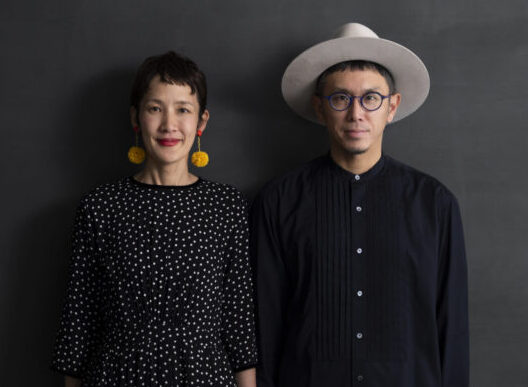
photo shingo mitsuno
tupera tupera
Comprising Tatsuya Kameyama and Atsuko Nakagawa, tupera tupera is active across a wide range of fields, from picture books and illustration to art direction for TV, theatre, and spaces. Its numerous publications include Make Faces (Kokuyo), Yasai-san (Gakken), Iroiro Bus (Dainippon Tosho), and Poop Shiritori (Hakusensha). Its books
have been translated and published in many countries. The duo also serves as art director for the NHK Educational TV arts and crafts show Nosey’s Inspiration Workshop. The picture book Polar Bear’s Underwear (Bronze Shinsha) won the Readers’ Award at the 18th Japan Picture Book Awards and Grand Prize at the Prix Du Livre Jeunesse Marseille 2014 (Marseille Children’s Book Awards 2014).
Panda Bathhouse (Ehonkan) won Grand Prize at the 3rd Town Bookstores’ Choice Picture Book Awards, while The Planet Cabbage Animal Book (Alicekan) received Grand Prize at the 23rd Japan Picture Book Awards. In 2019, tupera tupera was the recipient of the inaugural Takashi Yanase Cultural Award Grand Prize.